



Adams’ Navy service kept Vietnam fleet supplied
November 7, 2026
Dick Adams never considered himself the most visible part of the war effort.
He served below deck in the engine room of the USS Aludra, helping keep the steam-powered refrigerated supply ship moving through the waters off Vietnam. The sailors and Marines receiving the ship’s cargo, however, depended on Adams and his crewmates for some of the most basic necessities of war.
“We were just like a supermarket,” Adams said.

That service — along with his decades of involvement in local veterans organizations — is being recognized as Adams serves as grand marshal of The American Legion’s Veterans Day Parade, being held in downtown Colby on November 7.
Adams, a Colby native and 1965 high school graduate, entered the Navy after receiving a draft notice bearing the ominous word “Greetings.”
“I thought, ‘I don’t want to go in the Army,’” he recalled.
Adams went to the courthouse, found a Navy recruiter and enlisted. He entered active-duty Feb. 28, 1966, and served until Feb. 28, 1970, attaining the rank of machinist’s mate second class, or E-5.
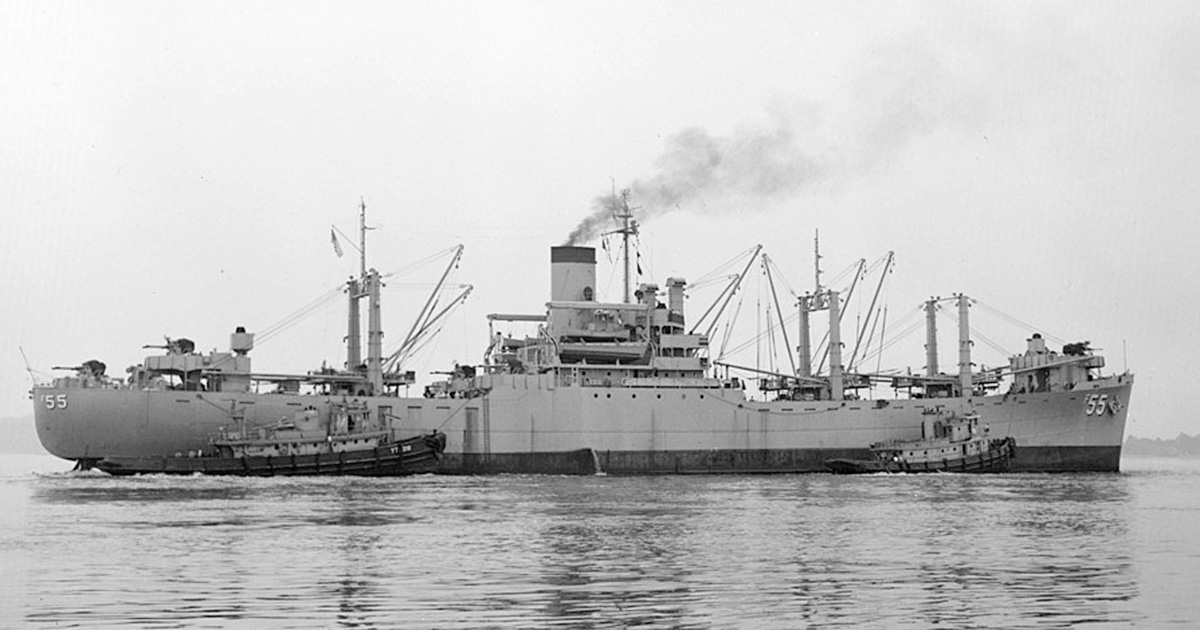
His assignment placed him aboard the USS Aludra, AF-55, a refrigerated stores ship operating from Oakland, California. The vessel carried food and other provisions to American warships at sea, allowing those ships to remain on station rather than returning to port for supplies.
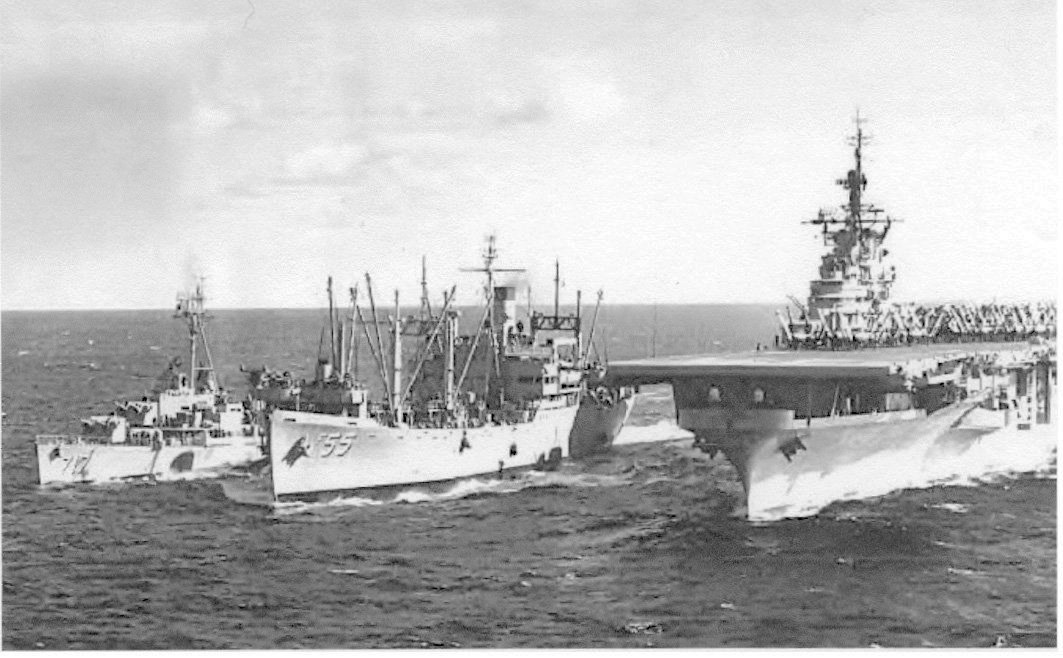
Orders from other ships were assembled aboard the Aludra, packed into cargo nets and moved across cables while the vessels steamed alongside one another.
The work was not dramatic in the way naval gunfire or aircraft operations were, but it was indispensable. A fleet could not continue fighting without food, fuel, ammunition and the sailors who delivered them. Oilers transferred fuel, ammunition ships replenished magazines and stores ships such as the Aludra kept crews fed.
Every crate transferred by the Aludra helped sustain the sailors whose ships supported American troops ashore. Every successful replenishment meant another vessel could remain near Vietnam, ready to provide air cover, naval gunfire, transportation or other support.
Historical records show the Aludra earned five campaign stars for Vietnam service. Photographs document the ship replenishing vessels such as the aircraft carrier USS Oriskany while flight operations continued off Vietnam. The ship also supplied the battleship USS New Jersey during its 1968 combat deployment.
Adams remembers the New Jersey pulling alongside the Aludra and the impression made by the battleship’s immense guns.
“What a classy ship,” he said. “That was a pretty ship.”
The New Jersey’s official 1968 history records an overnight replenishment from the Aludra off Vietnam. Within hours, the battleship was back on station supporting the 3rd Marine Division, firing on structures, an artillery position and enemy movement near the demilitarized zone.
The sequence illustrated the often-unseen chain connecting support sailors to troops in combat. Before the New Jersey could deliver fire for Marines ashore, other sailors had to keep the battleship supplied. Adams and the Aludra’s crew formed one link in that chain.
Although Adams worked in the ship’s engine room, the war was never entirely out of sight. The Aludra operated close enough to the Vietnamese coast that he could see explosions along the jungle canopy.
What he remembers most is the landscape.
“There was so much foliage on that ground there,” Adams said. “I don’t know how those guys fought.”
Looking at the dense jungle, he wondered how American ground forces could prevail in such unforgiving terrain. The vegetation concealed movement, limited visibility and made an already difficult war even more dangerous.
“That’s why it was a long, drawn-out war,” he said. “The landscape was tough.”
His view from offshore also left Adams with a lasting appreciation for the service members who had to enter that jungle. He had chosen the Navy partly because he did not want to fight his way through it, but his ship’s mission remained directly tied to those who did.
The Aludra itself had a long history of carrying supplies. Built in Oakland during World War II as the civilian refrigerated cargo ship Matchless, it was acquired by the Navy and commissioned as the Aludra in 1952. The vessel served during the Korean and Vietnam wars before being decommissioned in September 1969.
After leaving the Navy in 1970, Adams briefly worked at a machine shop in San Diego. The big city did not suit him, and he returned home.
In 1974, he went to work for Central Kansas Power at the generating plant near Colby’s golf course. When changes in the electric industry led to the plant’s closure, Adams moved to the line department. Central Kansas Power eventually became part of Midwest Energy, where he continued working until retirement.
Adams and his wife, Karen, raised two children, Aaron and Amy. He now describes retirement simply: He does what he wants to do.
His commitment to other veterans has lasted nearly as long as his military service is in the past. Adams has belonged to The American Legion for approximately 57 years and has been a member of the Veterans of Foreign Wars for nearly as long.
He is modest about being placed at the head of the parade. Yet his story represents precisely what Veterans Day is intended to honor: not only the service members whose jobs placed them in the public eye, but also the thousands whose work happened below deck, behind the lines or far from public recognition.
For Adams, service meant long hours in a steamship’s engine room and helping ensure that food and provisions reached the fleet. For the men aboard the ships receiving those supplies — and for the troops counting on those ships — that quiet work mattered.
The parade gives the community an opportunity to say what Adams and generations of veterans did not always hear when they returned home: Thank you.