


Kansas Main Street Tour Sparks New Vision for Downtown Colby
March 20, 2026
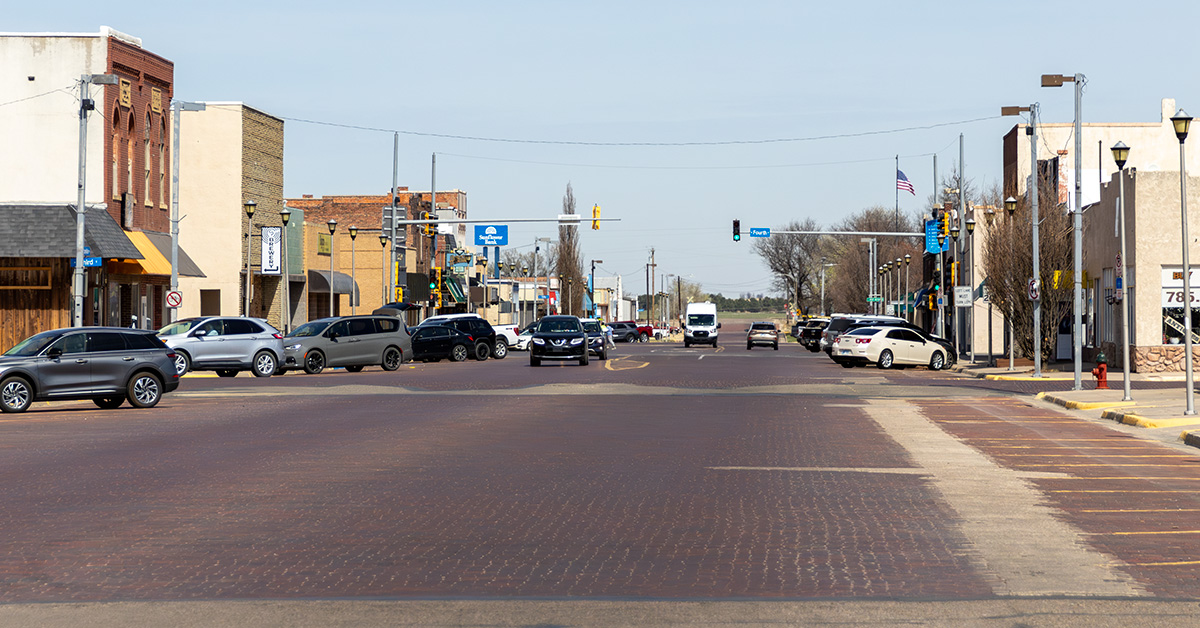
A visit from Andrew Simpson on March 20 is already generating renewed conversation about the future of downtown Colby, as community leaders and business owners explored what participation in Kansas Main Street could mean for long-term revitalization.
Simpson, representing the Kansas Department of Commerce, spent part of the day walking Franklin Avenue with local stakeholders, touring the city’s designated downtown district. The area stretches from railroad track to railroad track, extending two blocks both east and west, encompassing the heart of Colby’s historic commercial corridor.
The visit served as more than a simple walkthrough. It was an early step in evaluating how Colby could align itself with a program designed to strengthen downtown economies across Kansas through preservation, business development, and community engagement.
Kansas Main Street is part of a broader national network of downtown revitalization programs and is structured around a proven framework known as the Four-Point Approach. That model focuses on organization, design, promotion, and economic vitality—helping communities build strong leadership, improve the physical appearance of downtowns, market their districts effectively, and support business growth.
This article is brought to you by
During the tour, local participants discussed how that structure could translate to Colby.
Rather than acting as a direct funding source, Kansas Main Street provides technical assistance, training, and access to statewide and national resources. Communities in the program receive guidance on everything from historic building rehabilitation and grant navigation to small business support and event development.
Local leaders noted that while the program itself does not issue grants, participation can significantly strengthen applications for funding opportunities. Being part of a Main Street program can serve as a key factor in scoring for competitive grants, including programs like the Historic Economic Asset Lifeline (HEAL) initiative, which has supported major building renovation projects across Kansas.
As Simpson moved through downtown storefronts and redevelopment sites, business owners shared firsthand examples of ongoing investment. Several buildings along Franklin are in various stages of renovation, including upper-story apartment conversions, mixed-use spaces, and plans for short-term rental units.
One highlighted project includes the redevelopment of a historic building into multiple apartments, Airbnb-style units, and office space—an example of the type of housing-driven revitalization Kansas Main Street actively encourages. Across the state, the program has emphasized the importance of bringing residents back into downtown districts to create consistent foot traffic and support local businesses.
Successful Main Street communities require a structured local organization, typically with a dedicated director and strong partnerships between city government, economic development groups, chambers of commerce, and private stakeholders.
Colby has previously participated at a lower level, often referred to as an affiliate membership. However, recent restructuring within Kansas Main Street has eliminated that entry tier, instead encouraging communities to pursue a more comprehensive and fully engaged model. Simpson’s visit reflects a broader effort to expand participation in western Kansas, where few communities are currently represented in the program.
To move forward, Colby would need to formalize its downtown efforts.
That process is already beginning with the reorganization of a local group now operating as “Colby Downtown,” aimed at unifying businesses and stakeholders around a shared vision for revitalization. Under the Kansas Main Street framework, that group would play a central role in coordinating projects, events, and long-term planning.
Throughout the tour, there was a clear sense of momentum.
Discussions included potential improvements to lighting, walkability, and streetscape design, along with ideas for enhancing the overall atmosphere through outdoor seating, music, and public gathering spaces. Business owners pointed to visible progress already underway, from façade improvements to interior renovations and new business concepts.
Kansas Main Street emphasizes that these types of incremental improvements, when coordinated under a unified strategy, can lead to measurable economic impact. Communities in the program often see increased private investment, business retention, and tourism activity as their downtown districts become more active and attractive.
As one participant noted during the tour, success depends on more than chasing grants—it requires a community-wide effort and a shared belief in the future of downtown.
With visible reinvestment already taking place and renewed interest in structured revitalization, the March 20 visit may serve as a turning point. While no formal decision has been made, the groundwork is being laid for a more intentional approach to downtown development.
If Colby chooses to pursue full participation in Kansas Main Street, it would join a network of communities across the state working toward the same goal—building vibrant, sustainable downtowns that serve as both economic engines and gathering places.
For now, the message from the tour was clear: the opportunity is there.
The next step is deciding how far to take it.