



Marshall Pushes Election Integrity, Agriculture Support, and Ethics Reform in Busy Week of Legislative Activity
March 23, 2026
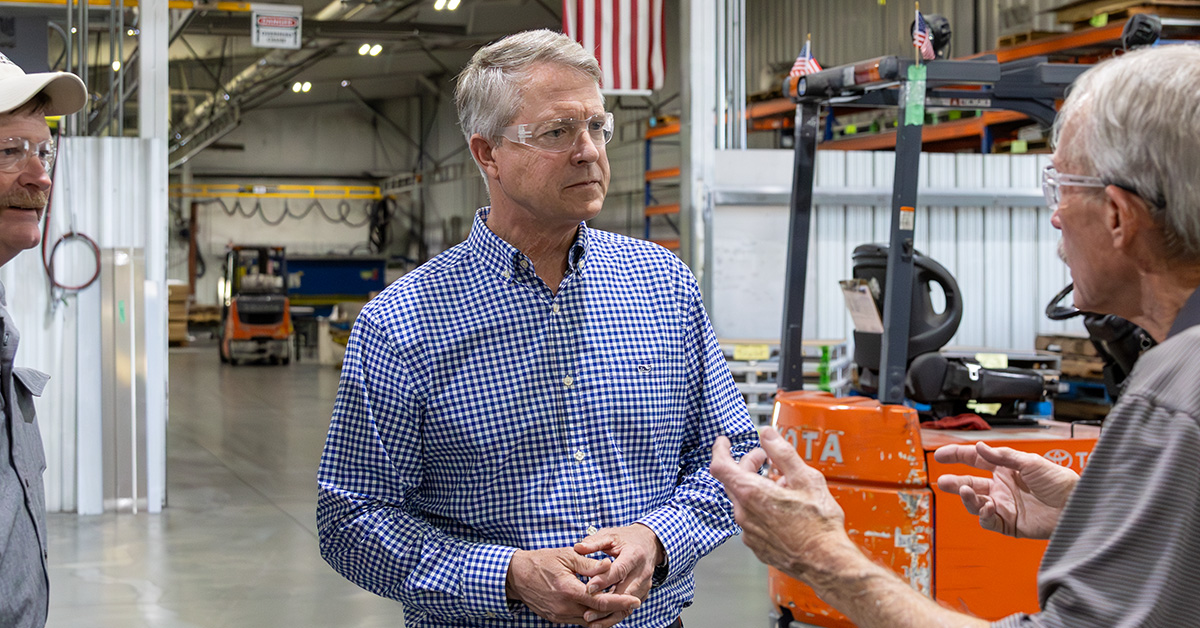
A recent wave of activity from the office of Roger Marshall highlights a broad legislative and policy push spanning election security, agriculture, national security, and government ethics, according to a March 18 press conference and multiple press releases issued in recent days.
During a virtual press conference on March 18, Marshall focused heavily on federal funding disputes tied to the Department of Homeland Security, as well as his support for the SAVE Act, a proposal aimed at strengthening election verification requirements. Marshall expressed frustration with ongoing negotiations in Washington, placing blame on Democratic lawmakers for what he described as a lack of engagement on DHS funding discussions. He argued that disagreements over issues such as masking requirements for ICE agents have contributed to stalled progress, framing the broader conflict as a debate between political priorities and national security concerns.
On election policy, Marshall emphasized the importance of ensuring that only U.S. citizens participate in federal elections. He pointed to concerns about non-citizen populations and argued that stronger verification systems are necessary to maintain public confidence. The SAVE Act, which has not yet secured enough bipartisan support to advance, would require proof of citizenship for voter registration and reinforce identification requirements during voting. Marshall acknowledged questions about potential barriers for eligible voters, including recently married individuals needing to re-register, but maintained that the legislation is designed to protect election integrity.
Those themes were echoed in a separate media appearance, where Marshall stated the need to “trust but verify” election systems, reinforcing his position that stronger safeguards are necessary to maintain voter confidence.

Beyond election policy, Marshall’s recent activity has also centered on agriculture and global economic conditions—issues particularly relevant to Kansas. In response to questions about international tensions, including conflict involving Iran, he suggested that U.S. energy independence and agricultural exports could position the country favorably, even amid global instability. He noted that Kansas producers may see increased demand, while also acknowledging ongoing concerns about input costs such as fertilizer.
Addressing those concerns directly, Marshall recently introduced bipartisan legislation aimed at boosting domestic fertilizer production. The bill, co-sponsored with lawmakers from both parties, is designed to strengthen the U.S. supply chain, encourage innovation, and reduce costs for farmers facing volatile global markets. The proposal prioritizes investment in domestic manufacturing and seeks to expand access to alternative crop inputs, with supporters arguing it could stabilize pricing and improve long-term reliability for agricultural producers.
Marshall has also turned attention to ethics reform in Washington. In another legislative effort, he introduced a proposal to prohibit members of Congress and their immediate families from trading individual stocks, while requiring advance public disclosure of stock sales. The measure is aimed at addressing concerns about insider trading and restoring public trust in federal institutions.
Taken together, the recent announcements reflect a multi-front agenda that blends national policy debates with issues that directly affect Kansas constituents. From election security and federal funding disputes to agriculture and government transparency, Marshall’s recent actions signal an effort to position himself at the center of several high-profile legislative conversations in Washington.
As Congress continues to navigate partisan divides on many of these topics, the fate of several of these proposals—including the SAVE Act and fertilizer legislation—will likely depend on whether broader bipartisan consensus can be reached in the months ahead.