


Colby Residents Join Nationwide “No Kings” Protest Movement
March 28, 2026
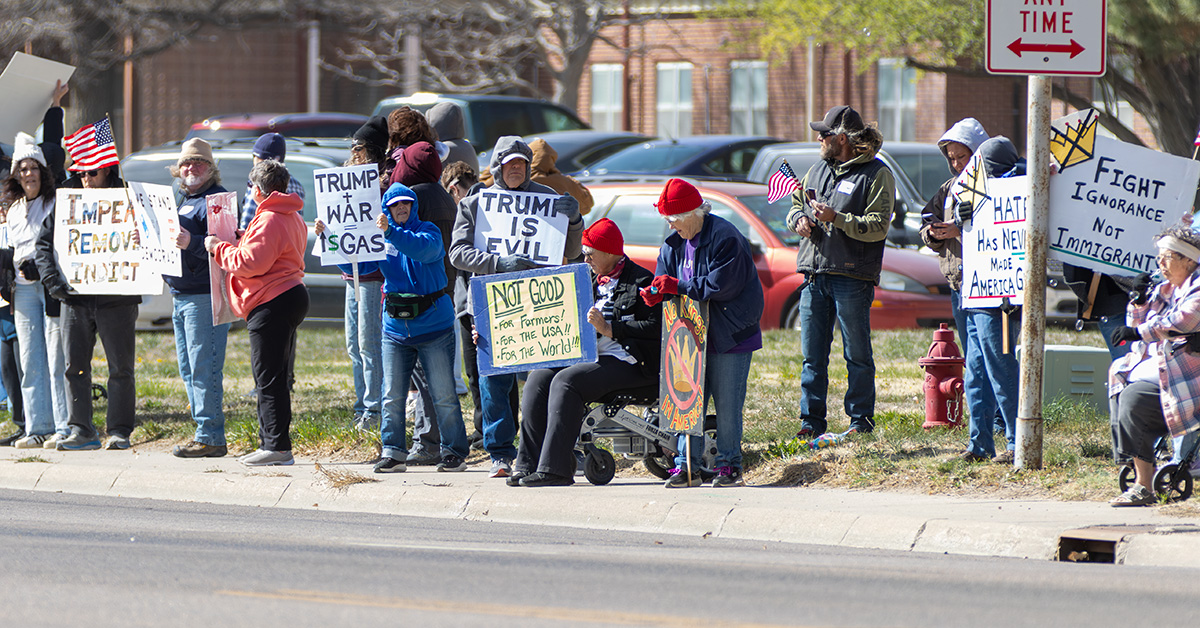
A steady stream of demonstrators lined Range Avenue in Colby on March 28, joining a coordinated national effort known as the “No Kings” protest movement.
Roughly 75 to 80 people gathered near the Historic St. Thomas Apartments, according to event organizer Connie Davis, with individuals arriving throughout the late morning despite strong winds that swept across the area. The local turnout marked an increase from previous similar gatherings in the community, which Davis estimated had drawn closer to 50 to 60 participants at their last event.
Participants held signs along the roadside, engaging passing traffic as part of a broader demonstration that spanned communities across Kansas and the United States. The Colby protest was one of many tied to the larger “No Kings” movement, which organizers describe as a grassroots response to concerns about government overreach and political accountability, according to information published on the group’s website.
Across Kansas, the demonstrations drew significantly larger crowds in more populated areas. Reporting from the Kansas Reflector noted that thousands of participants lined streets in some regions of the state, with one demonstration stretching for miles. That coverage highlighted the statewide scale of the movement while placing smaller gatherings, like Colby’s, within a wider context of civic engagement. "No Kings demonstration spans six miles as thousands of Kansans line streets" - The Kansas Reflector

Locally, participants represented a mix of backgrounds and viewpoints. Davis said attendees traveled not only from Colby and Thomas County but from across northwest Kansas, and even included at least one visitor from out of state who learned about the event online.
While the protest was not centered on a single issue, several themes emerged among those in attendance. Concerns discussed included agricultural economics, tariffs, and the rising cost of inports such as fertilizer—issues that have direct implications for rural communities in western Kansas. Others expressed interest in broader national topics such as voting rights and social policy.
Despite the political nature of the demonstration, Davis emphasized that the gathering itself was not aligned with a single party or ideology. She noted that participants included Republicans, independents, and others who shared concerns about current issues but did not necessarily organize along partisan lines.
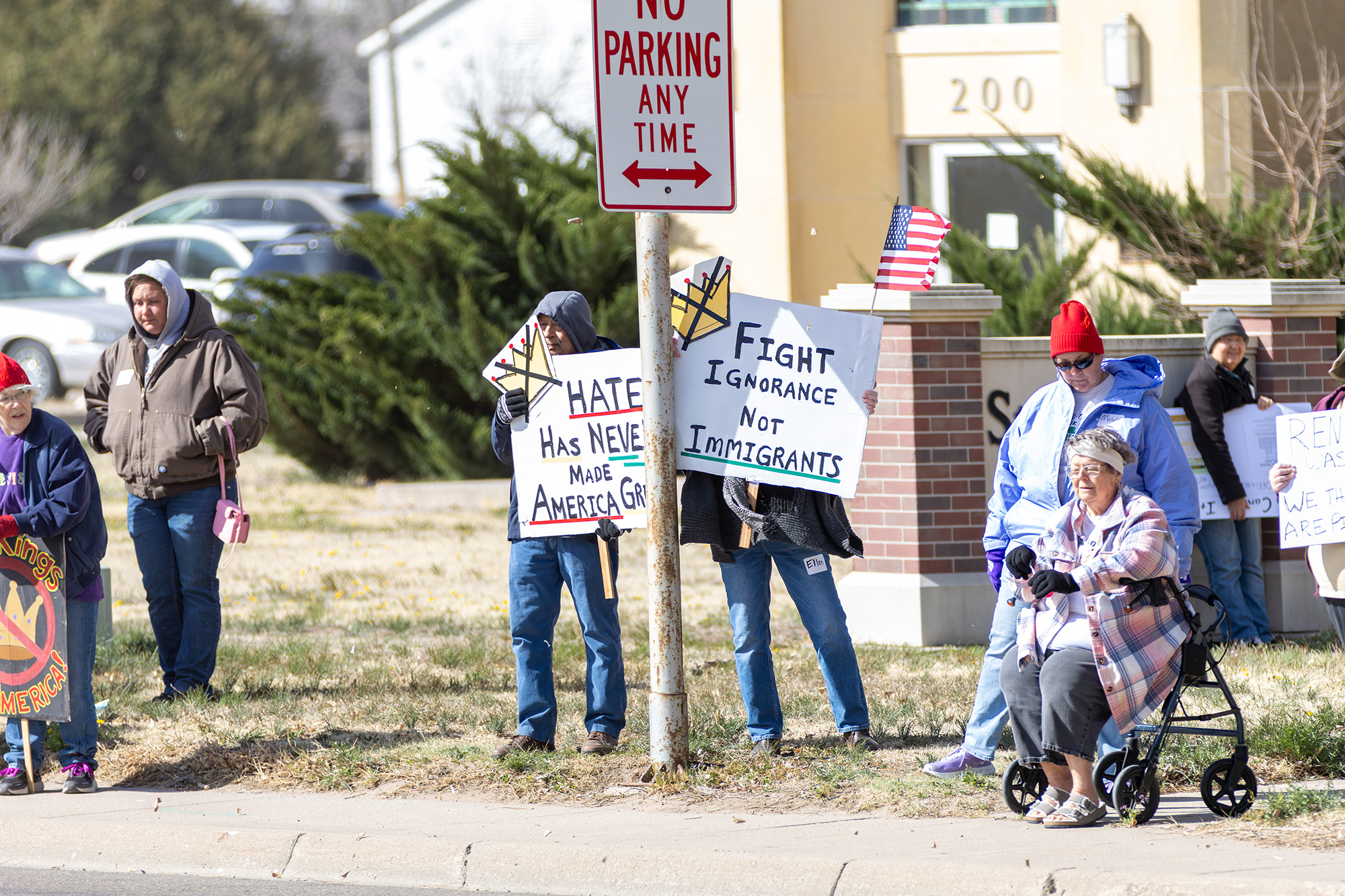
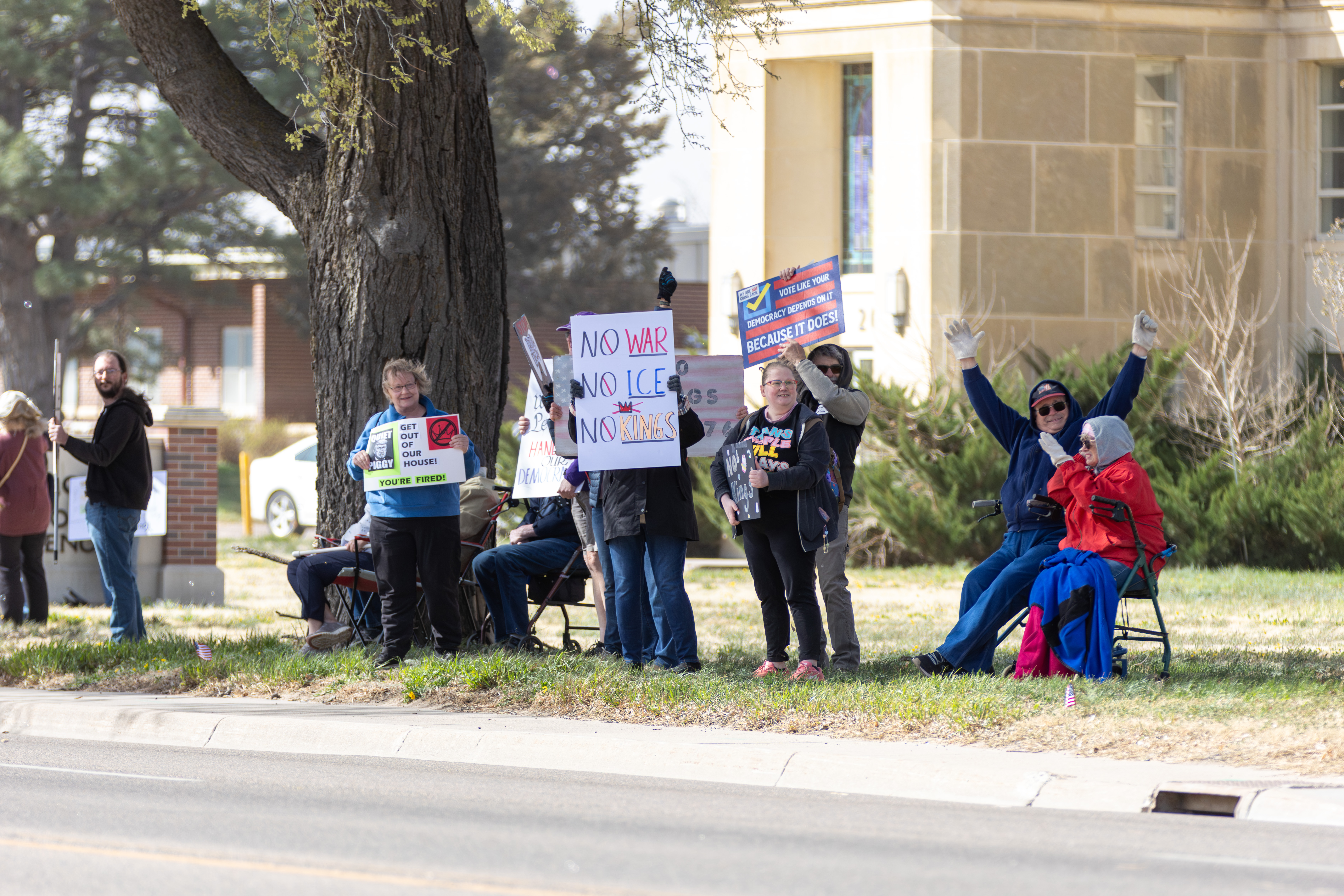
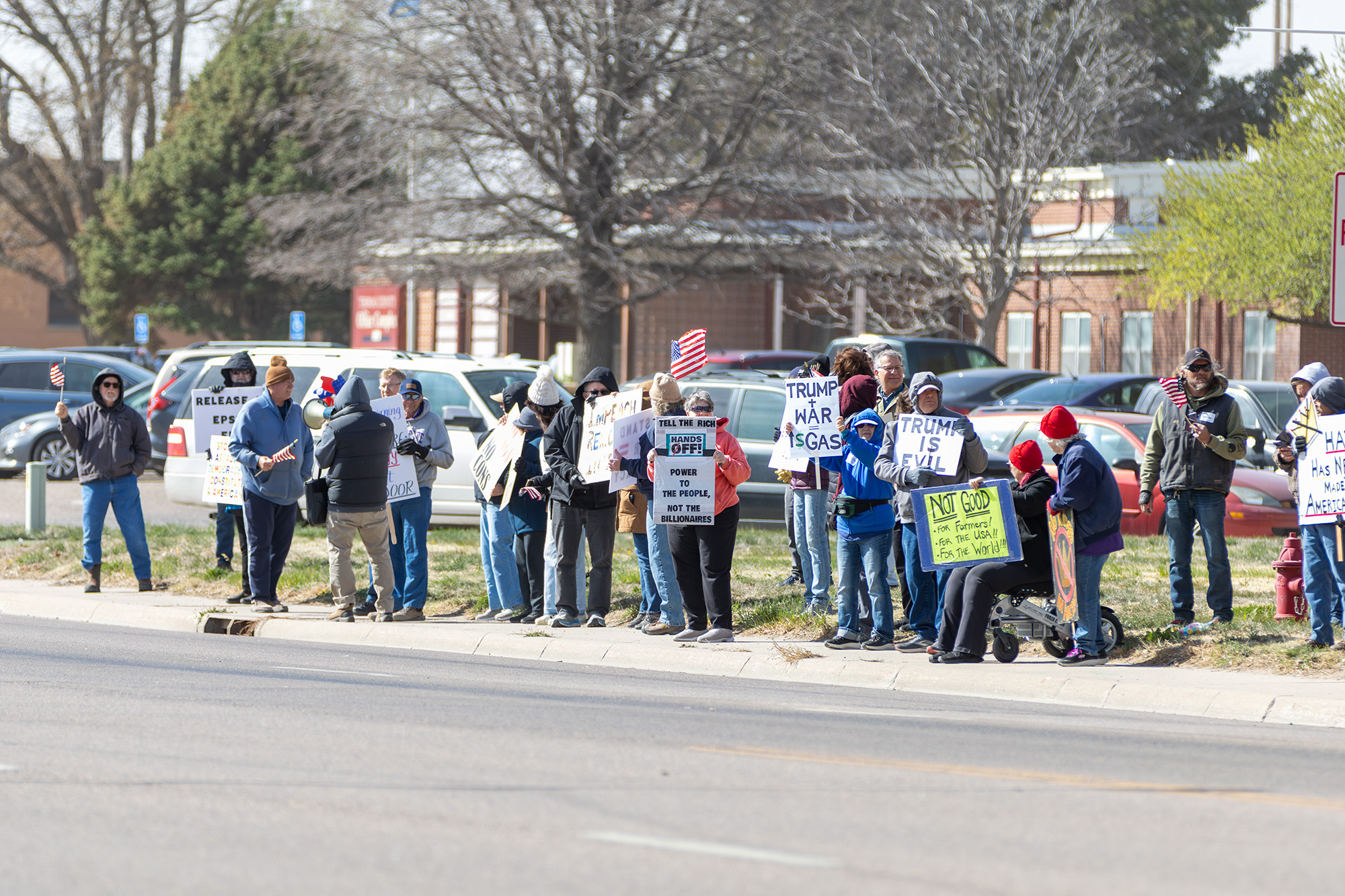
Weather conditions were a notable factor throughout the event. Strong wind gusts—estimated by participants to be as high as 50 miles per hour—created challenges for those holding signs and standing along the roadway. Organizers encouraged participants to remain grouped together for safety and to use nearby parking areas before assembling along Range Avenue.
Following the roadside demonstration, some attendees gathered informally at a El Dos De Oros to continue conversations and connect with others who participated.
The Colby protest reflects a broader trend of civic participation taking place across rural and urban communities alike. While the scale of demonstrations varies widely, events such as the March 28 gathering illustrate how national movements continue to find local expression, even in smaller communities across western Kansas.