



Booked for Lunch Wraps Season with Thought-Provoking Look at AI and Accountability
April 9, 2026
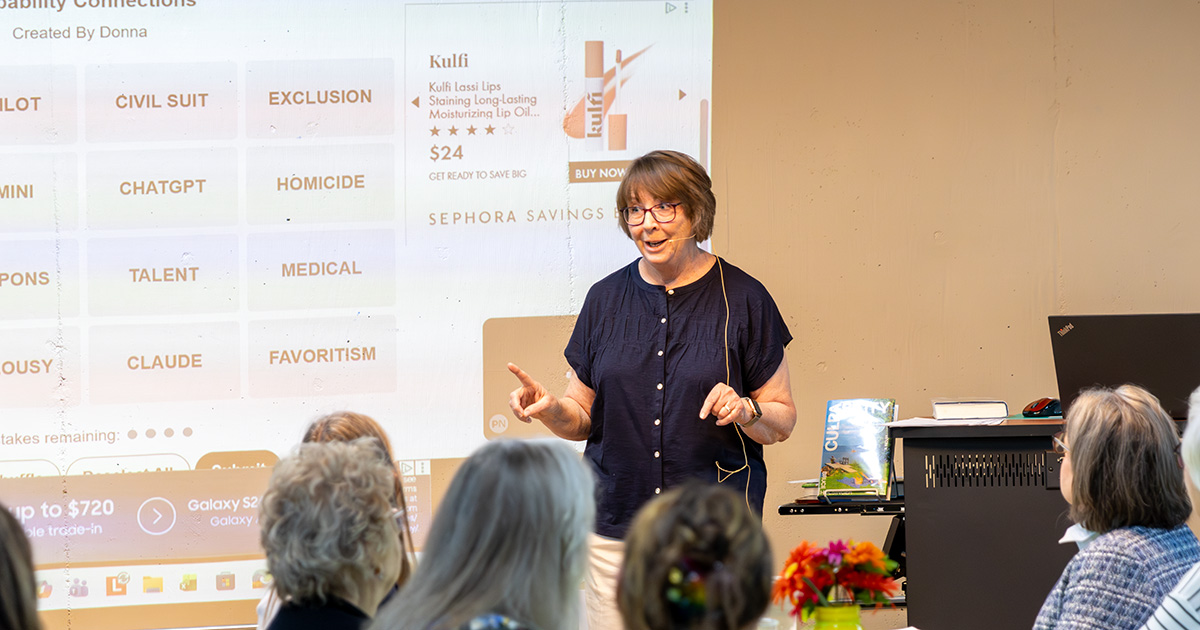
The final installment of the “Booked for Lunch” series at the Pioneer Memorial Library closed Thursday, April 9, with a timely and engaging presentation from Colby native Donna Henry, while also highlighting the continued impact of the Friends of the Pioneer Memorial Library.
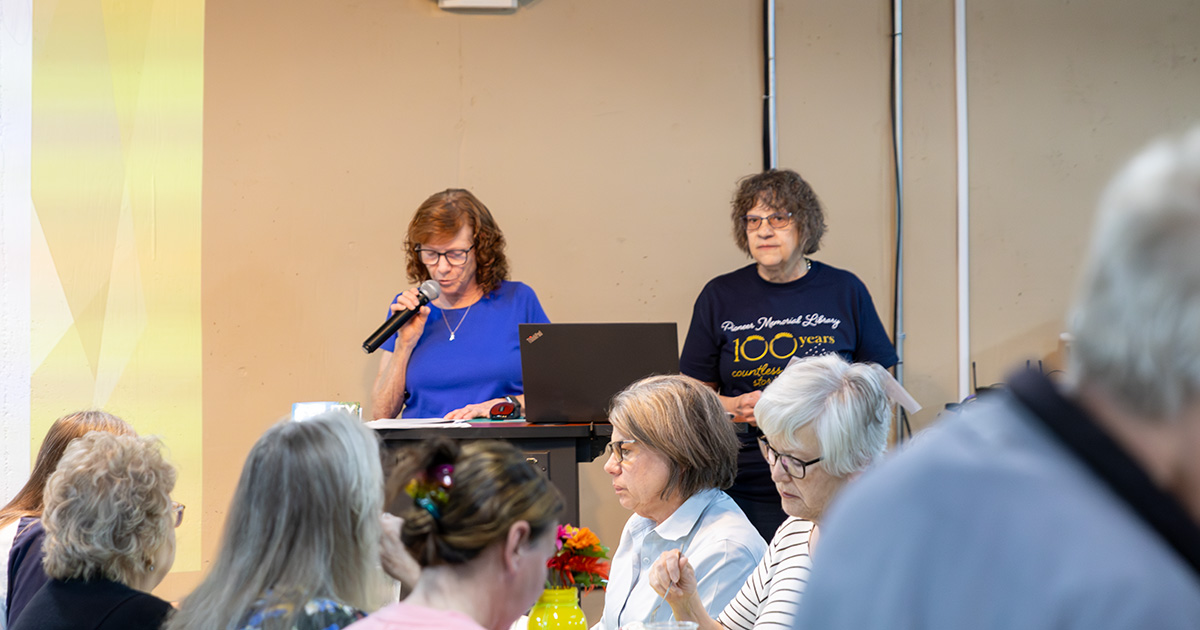
Before Henry took the floor, attendees were invited to sit in on the Friends’ annual public business meeting, led by board president Bev Vaughn. The meeting served as both a recap of the organization’s work and a brief look ahead.
Members approved minutes from the previous year, signed off on the financial report, and confirmed board membership updates that included the addition of three new members. Leadership also reviewed a year filled with programming support, fundraising efforts, and continued contributions to library services—efforts that remain critical to maintaining and expanding offerings at the Pioneer Memorial Library.
The group also reminded the public that board meetings are held monthly and remain open to anyone interested in becoming involved.
The Sunflower Standard is powered by

Following the adjournment, the focus shifted to Henry’s presentation, which centered on the novel “Culpability” by Bruce Holsinger—a story that explores the emotional and ethical fallout from an accident involving autonomous vehicle technology.
Henry, known locally for her thoughtful and interactive reviews, immediately engaged the audience with a word association game designed to introduce key themes from the book. From there, she walked attendees through the novel’s central conflict: a family grappling with guilt after a self-driving vehicle crash results in the deaths of two individuals.
The story examines how each family member processes responsibility. The teenage son was behind the wheel but not actively driving. The father was distracted. The daughters each carried their own version of guilt tied to moments leading up to the crash. Most notably, the mother—an expert in artificial intelligence—struggles with the realization that she helped design the very algorithm that controlled the vehicle.
Henry used the narrative to open a broader discussion about artificial intelligence and its growing presence in everyday life.
“This story has a multitude of ways that AI can affect daily lives,” Henry explained, emphasizing not just the technology itself, but the emotional and ethical consequences that can follow.
The conversation quickly expanded beyond the book, with audience members offering real-life examples of AI use in northwest Kansas. From banking alerts and healthcare systems to navigation apps and smartphones, participants acknowledged that AI is already deeply embedded in rural communities.
Henry reinforced that point with a clear takeaway.
“AI is part of our landscape now, and it will not go away,” she said. “The benefits are too prevalent, but we have to be mindful and responsible in how we use it.”
She also touched on the importance of verification, cautioning against blindly trusting AI-generated information and encouraging users to double-check sources—particularly as the technology continues to evolve.
In addition to her review, Henry previewed an upcoming May literature event at the library, which will focus on the novel “Tomorrow and Tomorrow and Tomorrow.” As is tradition, she also provided attendees with a curated list of recommended reads, offering a range of options for readers looking to expand their lists heading into summer.
The April 9 session marked the conclusion of this round of Booked for Lunch programming, which was held over three consecutive days as part of National Library Week. The series will return in September.
As the final chairs were cleared and conversations wrapped up, the event left attendees with more than just book recommendations—it offered a deeper reflection on technology, responsibility, and the changing world around them.