


Frahm Farmland Welcomes 2026 Hard Winter Wheat Quality Tour
May 21, 2026
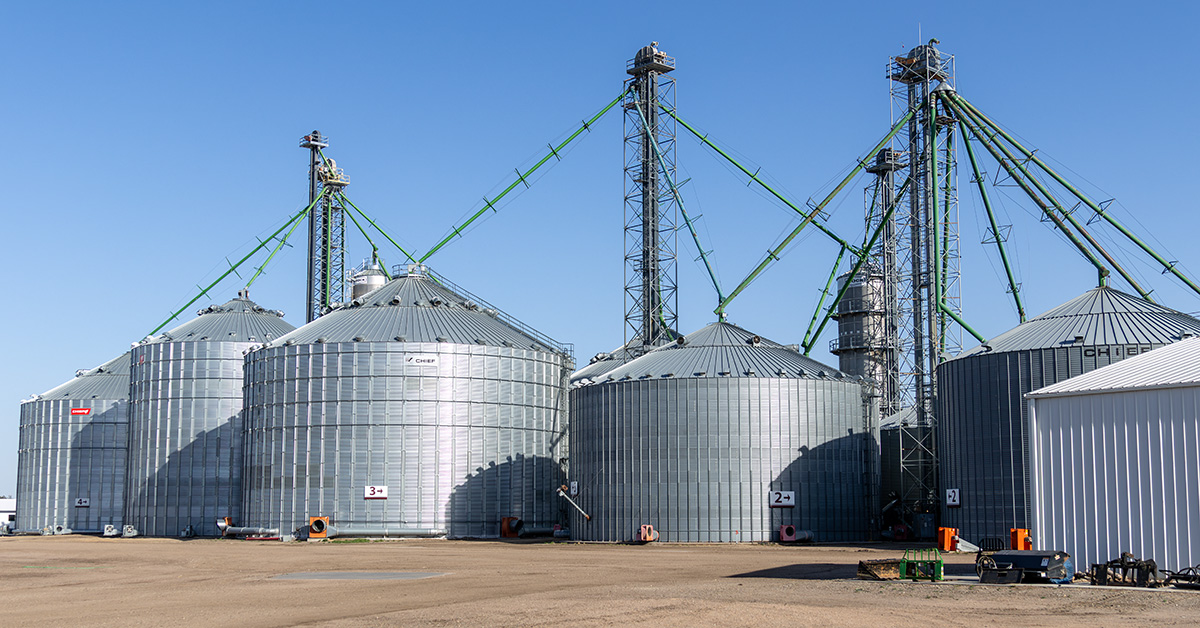
Sitting a handful of miles southwest of Colby, Frahm Farmland headquarters has been a staple stop on the Hard Winter Wheat Quality Tour for the better part of a decade. This year’s tour featured more than 100 wheat industry professionals, primarily from the United States, along with a handful of international representatives.
The group gathered on May 12 for the eighth consecutive year, and as in years past, many participants were relatively inexperienced when it came to evaluating wheat in the field. The tour would allow the group to make several stops throughout the day to test and observe actual wheat samples, then staying the night in Colby after food and drinks at the farm.
Hosted by the Kansas Wheat Alliance and the Wheat Quality Council, the tour brought together professionals including grain merchandisers, millers, bakers, seed company representatives, analysts, journalists, researchers and government officials.
This year’s group included representatives from companies like General Mills and Bimbo Bakeries USA, as well as staff from the U.S. Department of Agriculture, and university researchers. Prior to stopping in Colby, the participants evaluated 187 wheat fields stretching from Manhattan to northwest Kansas.

State Baseball and State Softball coverage is contingent upon Colby advancing through Monday's quaterfinal contests. If the Eagles qualify, The Sunflower Standard will travel to Lawrence to provide live updates, photos, and event coverage.
Once the group arrived at the Farm the attention shifted from wheat analysis and crop estimates to the farmstead of CEO Lon Frahm and the team behind one of the region’s most innovative farming operations.
As guests trickled in between 5:45 and 6:15 p.m., they were welcomed to a farm that’s brought together six generations of family ownership and cutting-edge technology with a strong commitment to employee ownership.
“Family farms,” one tour organizer said at introductions. “This is a great farm, an example of a modern farm, very advanced technology.”
The farm was founded by the Frahm family in the 1880s, with the operation taking huge strides forward since Lon took over in the 1980s. Starting with around 5,000 acres, Lon and his crew have built the farm into 45,000 acres today.
Lon explained prior to the tours that he made a deliberate effort to invest in the people who help operate it. Of the farm’s 12 full-time employees, 11 have purchased ownership stakes in the operation. In total, employees own approximately 13 percent of the business.
“It’s everyone’s 401(k),” Lon said during the tour.
Visitors then split into smaller groups, each led by an experienced farm employee. The tour showcased the various sophisticated aspects of the farm that allowing it to operate on a large scale while also serving as an in-house grain handling operation.
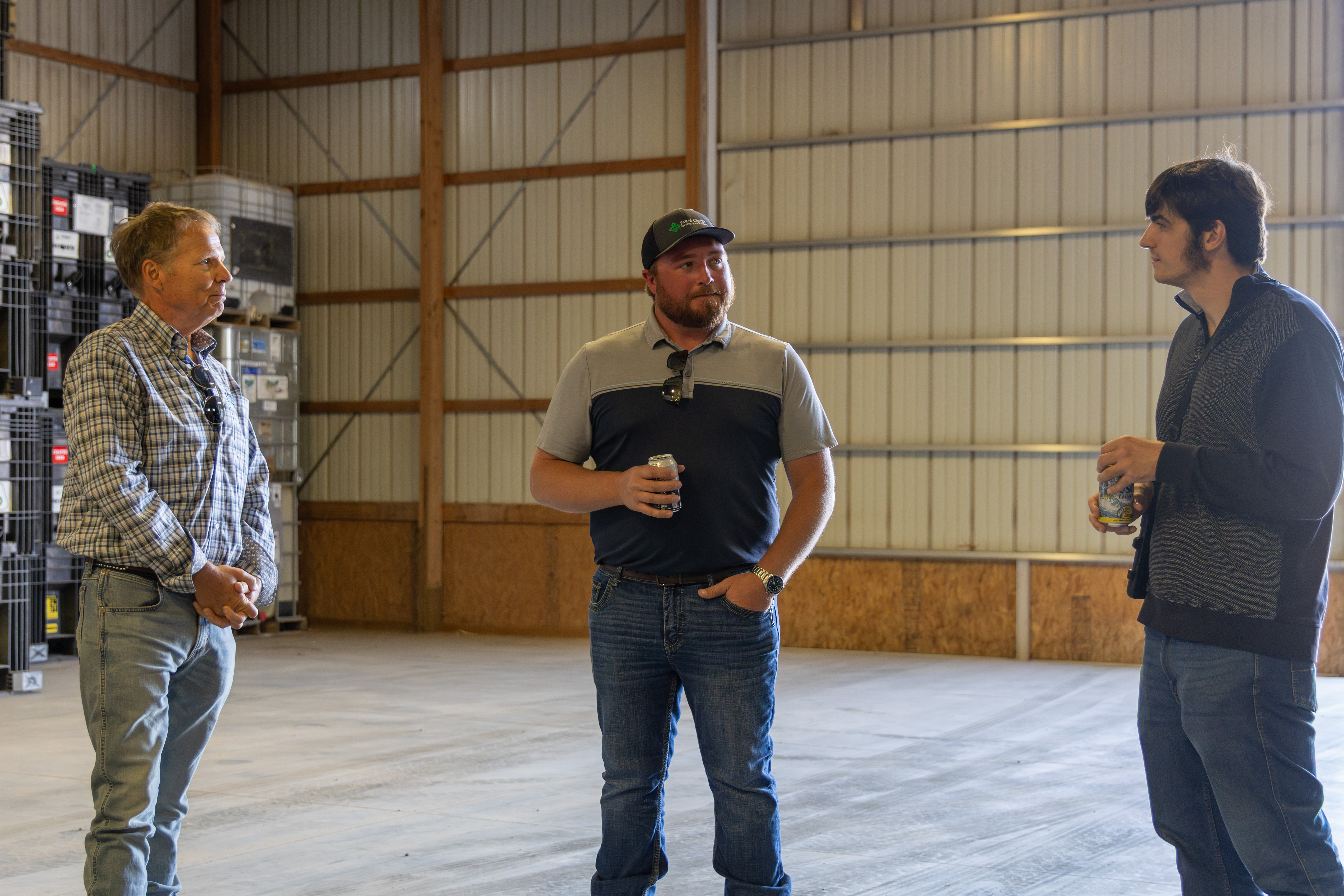
With the capacity to hold 3.8 million bushels and three natural gas grain dryers, a truck can be weighed, loaded, and sent back out in approximately six minutes according to tour guide Baker Bugby. Bugby has been with the farm for 12 years and is often referred to as the Social Chairman by Lon.
“Sometimes there’s as much money to be made running the grain elevator as there is in growing crops,” Lon told visitors.
The tour also traveled through the Crop Health Building, where chemicals and inputs are stored and mixed. They learned about the variety of precision agricultural tools including camera-equipped sprayers that can detect and spot spray weeds.
In the spring the farm uses four 24-row high-speed planters, advanced grain temperature monitoring systems, custom software for scale operations, and extensive data systems to monitor weather, markets, and equipment in real-time.
For many tour participants, especially the younger professionals new to agriculture, the stop offered a hands-on look at how technology and new management practices are reshaping modern farming.
During the tour, Lon explained that the farm hadn’t used summer fallow in nearly three decades. “We haven’t fallowed since 1998. Our irrigated ground has been in continuous corn since 1971.”
The farm relies heavily on no-till and strip-till practices, focusing on continuous cropping systems that maximize soil health while making the most of the region’s limited moisture.
After the tour, guests enjoyed beverages provided by Lon while the Kansas Wheat Alliance provided a Midwest staple for dinner. Options included pork tenderloin, chicken fried steak, mashed potatoes, green beans, salad, bread rolls, cookies, along with tea and water.
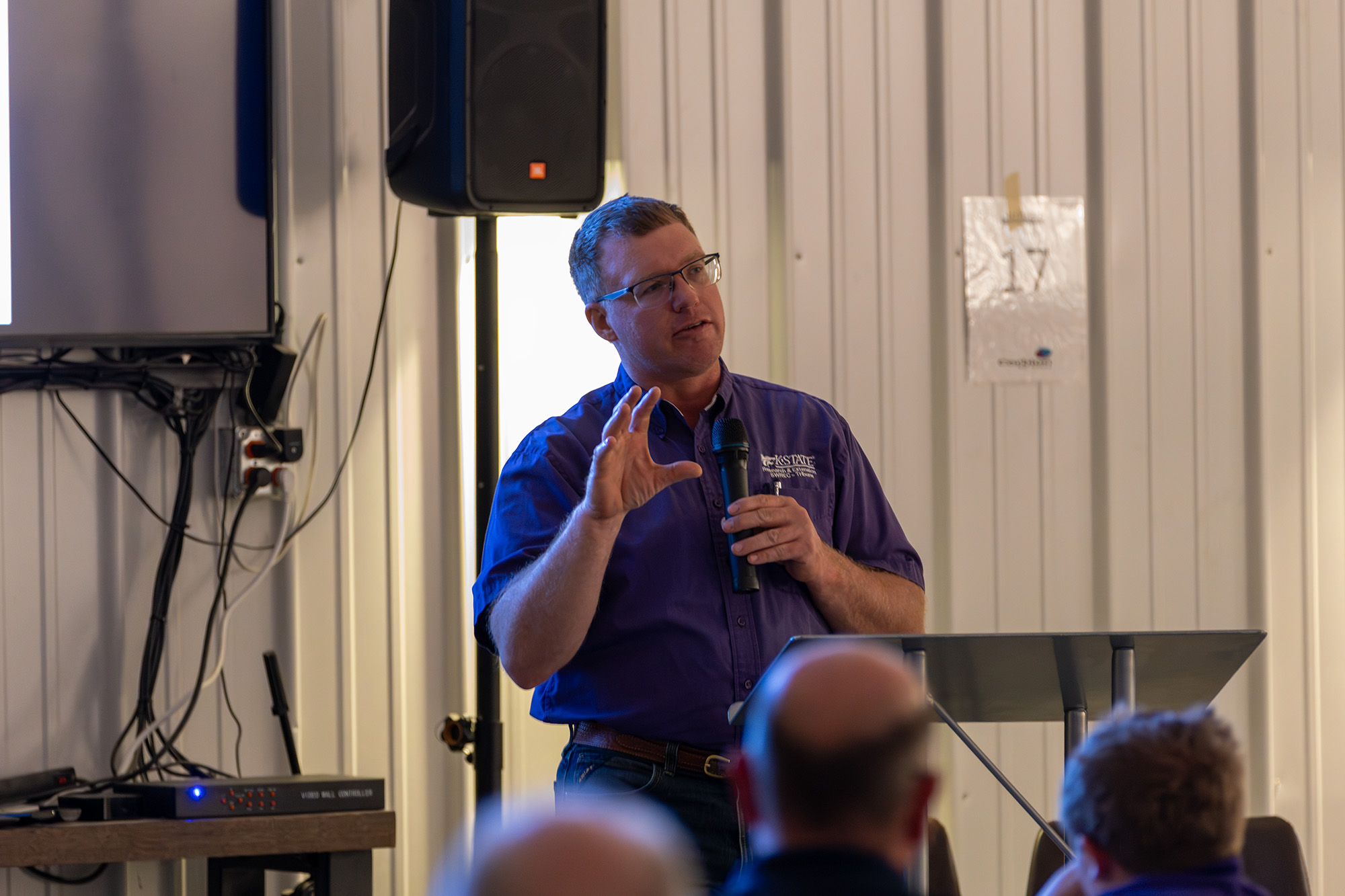
Once everyone had a plate, tour organizers began the presentation by having local agronomists Lucas Haag and Jeanne Falk Jones from K-State Research and Extension present. Much of the discussion focused on the difficulties in growing conditions that have impacted this year’s wheat crop, including temperature swings, drought stress, freeze injury, and disease pressure.
Tour participants then reported their observations from the 187 stops throughout the day.
The U.S. Department of Agriculture projected Kansas wheat production at 214 million bushels, based on an average yield of 37 bushels per acre and 5.8 million harvested acres. While the estimate is down significantly from last year, organizers noted the final numbers will depend heavily on abandonment and late-season weather.
The group then returned to Colby for a night’s rest before departing at sunrise to evaluate more wheat fields on the return trip to Manhattan, where the tour concluded.