



Marshall visits Colby Community College during statewide rural tour
August 18, 2026
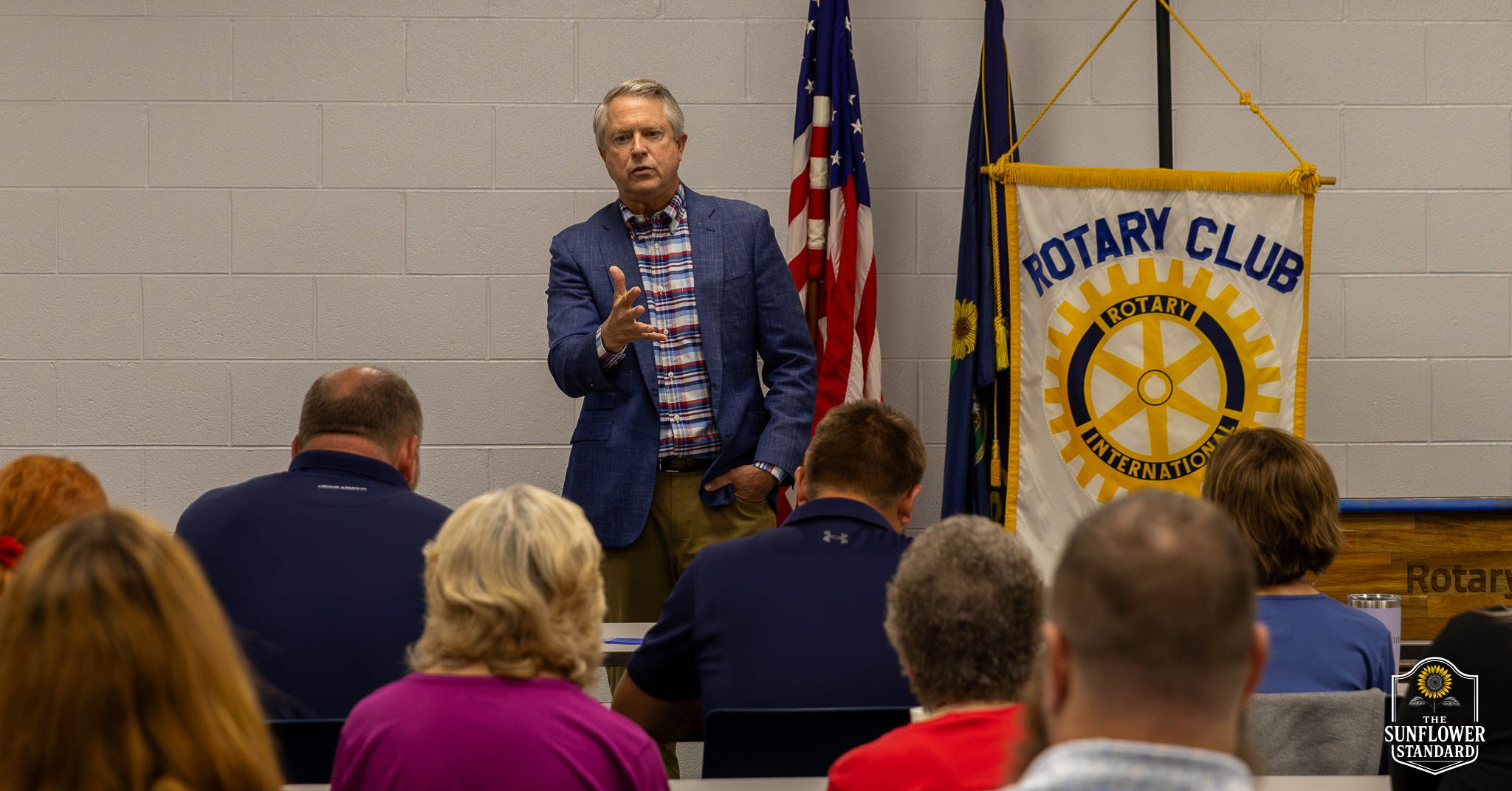
U.S. Sen. Roger Marshall visited Colby Community College on Tuesday, Aug. 18, to learn how the college’s Adult Education program is preparing northwest Kansas residents—including incarcerated students—for skilled jobs.
The meeting in the Thomas Hall boardroom was one of Marshall’s “120 Stops to Strengthen Rural Kansas,” a statewide August tour focused on rural health care, workforce training, infrastructure, manufacturing and other issues affecting Kansas communities.
Marshall and three members of his staff met with CCC President Seth Carter and college officials Hannah Callahan, Nikol Nolan, Diane Organ and Megan Kistler. College representatives began with an overview of enrollment before focusing much of the meeting on Adult Education.
Marshall acknowledged that he did not know much about adult education and spent the session asking how CCC’s program operates, whom it serves and how it is funded.

College officials said three faculty members cover a 15-county service area. The program works with Northwest Kansas Community Corrections, the Norton Correctional Facility and the correctional facility in Stockton, while also serving residents throughout the region who are not incarcerated.
A mobile unit allows the college to take instruction and testing into communities where transportation and distance can prevent students from reaching campus.
Officials emphasized that adult education is no longer limited to helping students earn a General Educational Development credential. The program increasingly connects students with career and technical education in fields such as welding, telecommunications and fiber optics.
Some students can work toward a high school equivalency credential while simultaneously receiving technical training. The objective, officials said, is not simply to help students pass the GED test but to help them reach college-ready scores and continue into higher education or the workforce.
During the last fiscal year, CCC’s program served approximately 200 students. Of those, 155 earned at least one credential, including GEDs and workplace credentials. Some students earned multiple credentials through co-enrollment.
About 60% of the program’s students are incarcerated, although that percentage varies from year to year. The remaining 40% come from communities across northwest Kansas.
A lack of instructors is one of the program’s most significant challenges. At the correctional facilities, CCC has responded by training qualified inmates to serve as peer tutors. Prospective tutors complete assessments and demonstrate proficiency in the subjects they will teach.
Math is often the greatest academic hurdle, but Organ said the underlying problem is frequently confidence rather than ability. Many adult learners have spent years believing they cannot succeed in school.
Peer tutors can help overcome that barrier because they understand the experience of the students they assist. One tutor, officials told Marshall, helped several other men complete their GEDs and now hopes to become a teacher after his release. CCC has connected him with Johnson County Community College and a Kansas City organization that works with high-risk youth.
Another former student completed the college’s telecommunications program while incarcerated and later became a site manager after his release. Officials said his coworkers did not know about his past, and he declined an opportunity to be featured nationally because he considered that chapter of his life to be behind him.

College representatives also gave Marshall letters written by incarcerated students describing how the program affected their lives.
The benefits extend beyond academic and workforce credentials, officials said. Correctional staff have observed behavioral changes among participants as education gives them a sense of purpose. Adult Education personnel also work with students on résumés, cover letters, interviewing and professional conduct as they prepare for employment.
Officials described education as an important tool for reducing recidivism, noting that most incarcerated people will eventually return to their communities. However, the correctional portion of CCC’s program does not receive federal Adult Education funding. College officials said it is supported through correctional-facility commissary-related revenue, while federal pass-through funding is essential for serving students in the general population.
That distinction is important as colleges monitor federal budget discussions that could affect Adult Education funding.
Marshall said the program has his support and that he did not expect its federal funding to be eliminated. He asked college officials to keep his office informed as the federal authorization and appropriations process develops.
“This is working,” Marshall said, pointing to people he has met during his statewide tour who moved from incarceration or other difficulties into long-term manufacturing careers.
He said those workers are filling needed positions, paying taxes and participating in their communities. Marshall also encouraged manufacturers to consider mentoring partnerships that could help Adult Education students make the transition into the workplace.
Marshall described welding, fiber optics and industrial maintenance as jobs unlikely to be replaced by artificial intelligence. While technology will continue changing manufacturing, he said, people will still be needed to operate, maintain and repair increasingly sophisticated equipment.
CCC officials said the program’s value can be seen in students who begin by seeking a GED, gain confidence and then pursue technical training, college courses or opportunities to help others.
“We say we’re investing in you, and you can invest in yourself,” Organ said.
After leaving the college, Marshall met with members of the Colby Rotary Club. He gave a presentation and answered questions from members before continuing his stops in northwest Kansas.