



Colby Police sharpen pursuit-stopping skills at Shalz Field
August 26, 2026
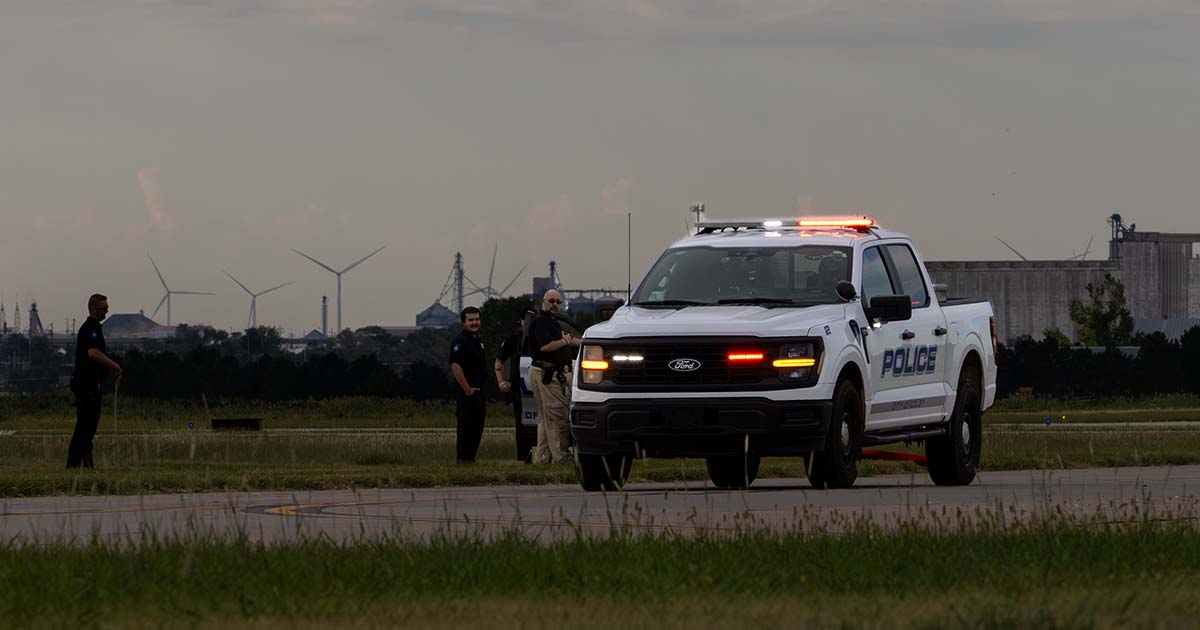
Officers with the Colby Police Department traded city streets for an airport taxiway during two days of stop-stick training Aug. 25-26 at Colby Municipal Airport-Shalz Field.
The exercise provided a controlled setting where officers could practice deploying tire-deflation devices commonly known as stop sticks. Law enforcement agencies use the devices to help bring dangerous vehicle pursuits to an end by gradually releasing air from a fleeing vehicle’s tires.
With several new additions to the department, Police Chief Jake Hess said it was important to provide the team with realistic, hands-on training. Dispatch personnel also participated, allowing officers and dispatchers to practice the communication and coordination that would be required during an actual pursuit.
Timing and communication were central to the exercise. Participants had to relay a vehicle’s location and direction of travel, select an appropriate deployment point and place the training device in the vehicle’s path at the correct moment.

Officers rotated through each position they could be assigned during a real incident. Hess and Assistant Chief Jared Lange took turns portraying the fleeing suspects.
The department used makeshift training spikes that did not damage the vehicles’ tires. That allowed officers to repeat the exercise while closely simulating the movements and decisions required to deploy an actual tire-deflation device.
Although the training was intended to resemble a real pursuit, it was conducted at slower, controlled speeds, with no vehicle expected to exceed 80 mph.
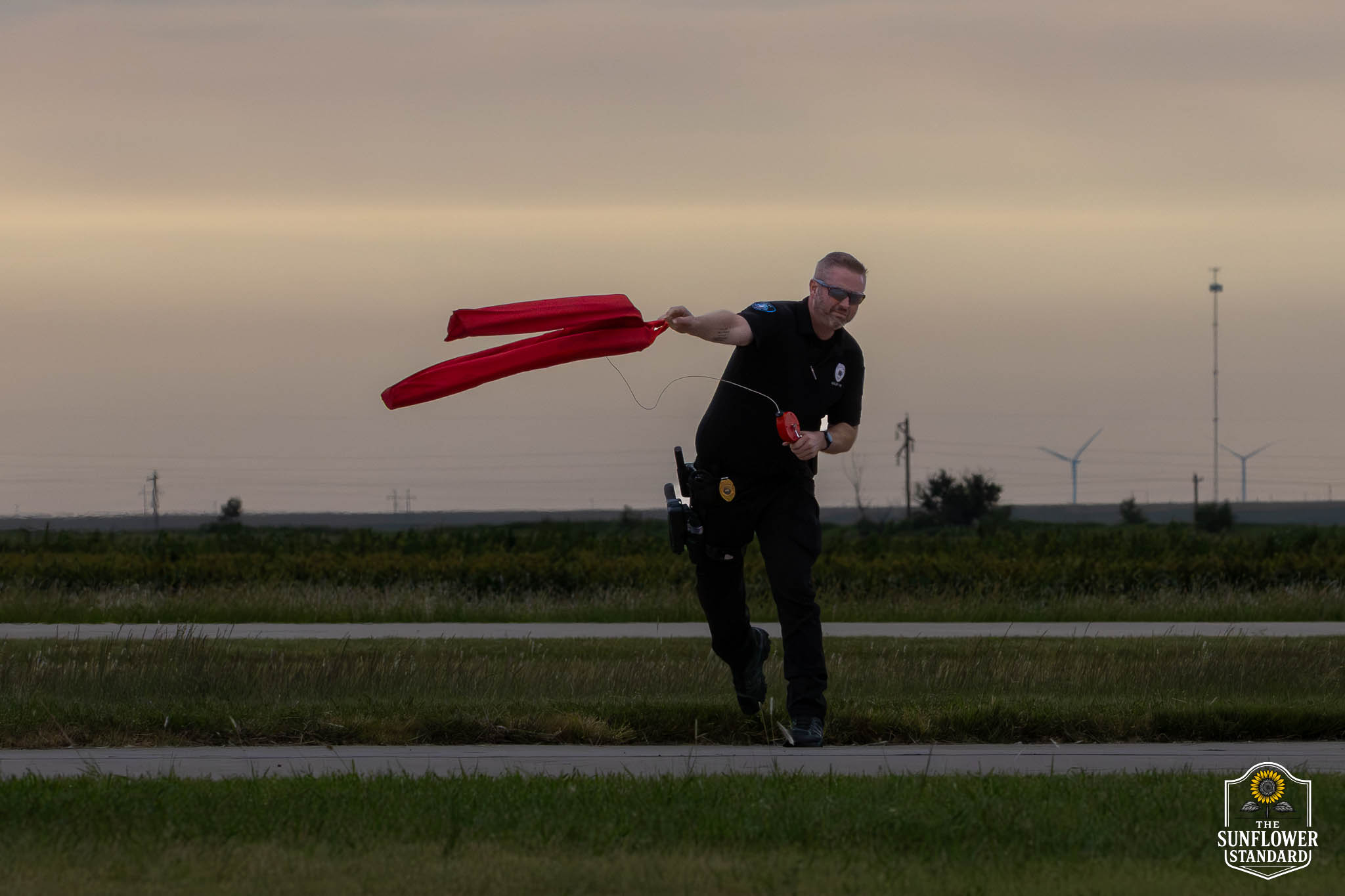
Fog and dim conditions created an additional challenge during Monday’s session, but the department continued with the training. The reduced visibility added another realistic element, requiring participants to remain aware of vehicle movements, radio traffic and changing conditions.
Stop sticks generally contain hollow spikes designed to puncture tires and release air at a controlled rate rather than causing an immediate blowout. The gradual deflation is intended to slow a fleeing vehicle while allowing the driver to retain some steering control.
Proper training is important because deploying the devices requires officers to choose a safe location, accurately judge the approaching vehicle’s speed and remain protected from traffic. Officers must also coordinate with dispatchers and other law enforcement personnel to prevent uninvolved motorists or pursuing patrol vehicles from striking the devices.
Shalz Field offered the department a long, open driving surface that would have been difficult to secure elsewhere. Closing a public road for an exercise of this kind would have created additional safety and traffic concerns, while the airport taxiway provided a suitable controlled environment.
Airport business continued as usual throughout the training. The exercise paused briefly whenever aircraft needed to arrive or depart.
Stephanie Stephenson of High Planes Aviation, LLC said the airport’s team is willing to make the property available when it can benefit Colby without interfering with aviation operations.
“Anytime the airport can use its property to benefit the community, our team will do what we can to accommodate it,” Stephenson said. “Especially for public service and emergency responders who need somewhere to get the training they need.”
Stephenson said the taxiway works well for an exercise of this kind because conducting the same training on a public road would be difficult.
The Stephenson and High Planes Aviation, LLC have operated the airport for two years. During that time, Stephenson said, traffic at Shalz Field has increased tremendously. Despite that growth, the airport team remains committed to helping the community whenever an activity does not require the airport to close or risk damage to its runways, taxiways or other infrastructure.
For the police department, the training offered officers and dispatchers an opportunity to develop their skills before facing the pressure and uncertainty of an actual high-speed pursuit. Repeated practice helps ensure that every member of the team understands their responsibilities and can work with others when timing and communication matter most.