



Small Crowd, Big Topics as Rep. Sharice Davids Visits Colby Community College
February 1, 2026
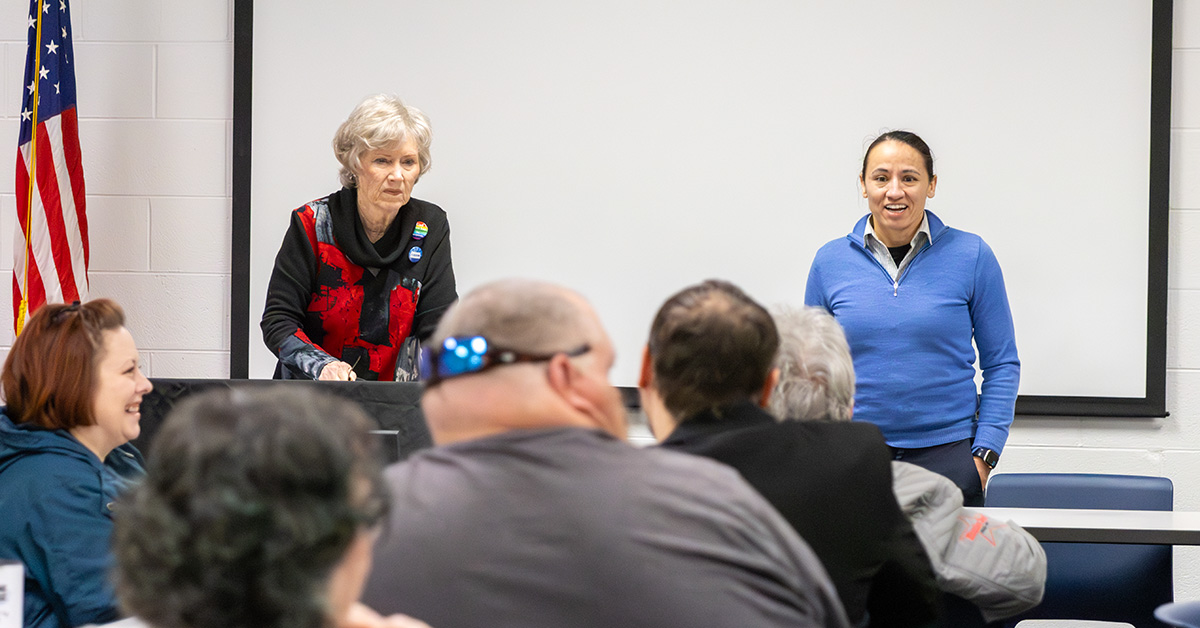
A small but engaged group of northwest Kansas residents gathered Sunday morning at Colby Community College for an informal, town-hall style discussion with U.S. Rep. Sharice Davids, who made a brief stop in Colby while touring western Kansas on Feb. 1.
The meeting was held in Room 106 of the Student Union at Colby Community College and drew just over 20 people, many of them active with local and regional Democratic organizations. The visit was not publicly billed in advance and was described by organizers as a short-notice opportunity that came together quickly as Davids’ schedule shifted during a western Kansas swing that also included a private tour of McCarty Dairy.
Before Davids arrived, local Democratic organizer Connie Davis led the group through routine party business and upcoming events. Among the topics discussed was a “Technology for Democrats” workshop scheduled for Feb. 21 at the Ag Center on the CCC campus, aimed at helping local organizers better use tools such as social media, ActBlue, and voter databases to communicate with supporters. Davis also highlighted the Kansas Democratic Party’s Washington Days in Topeka, set for March 6–8, encouraging attendees to participate.
Plans were also discussed for a renewed “No Kings” protest in Colby, tentatively set for March 28. Organizers said more than 70 people attended the last event and expressed interest in expanding the turnout this time. In addition, attendees were encouraged to help promote “Common Grounds,” a statewide Democratic gathering scheduled for April 11 at the Gateway Center in Oberlin, where all Democratic candidates in Kansas have been invited to participate and have committed to attend.
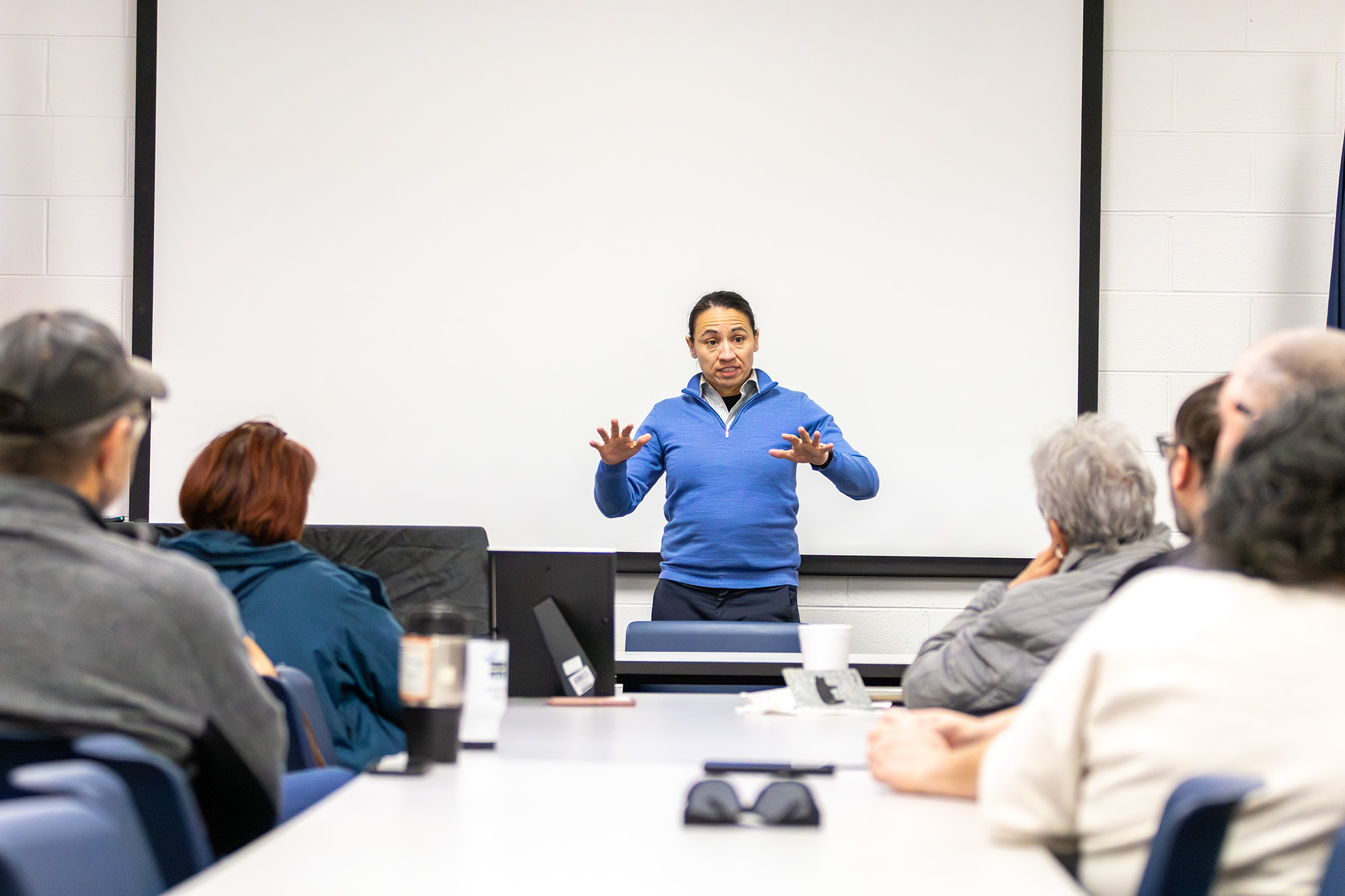
Davids arrived shortly after 11 a.m., entering the room casually and immediately engaging with attendees in a relaxed, conversational manner. She opened by sharing her background and explaining how her experiences have shaped her approach to public service. Raised by a single mother who served 20 years in the U.S. Army, Davids said her family’s time stationed in Kansas and Missouri gave her an early appreciation for public institutions and civic responsibility. She later worked her way through Johnson County Community College, the University of Missouri–Kansas City, and Cornell Law School, a path she said helps her relate to families navigating education, work, and economic pressures.
Now in her seventh year in Congress, Davids serves on the House Agriculture Committee and the Transportation and Infrastructure Committee. She told the group that joining the agriculture committee became a priority after redistricting expanded the rural footprint of her constituency, exposing her to more producers and ag-related issues than earlier in her tenure. While she acknowledged not having an agricultural background before entering office, Davids said the role has sparked a strong interest in learning how agriculture drives Kansas’ economy and how federal policy affects producers on the ground.
Much of the meeting was devoted to questions from attendees, with several focused on agriculture and rural policy. One participant raised concerns about proposals that could eliminate or weaken key farm programs such as ARC and PLC. Davids said she did not believe such changes were likely to succeed, citing bipartisan resistance from lawmakers representing agricultural states. However, she emphasized the importance of remaining vigilant and vocal, saying she would “fight tooth and nail” against efforts she believed would harm producers.
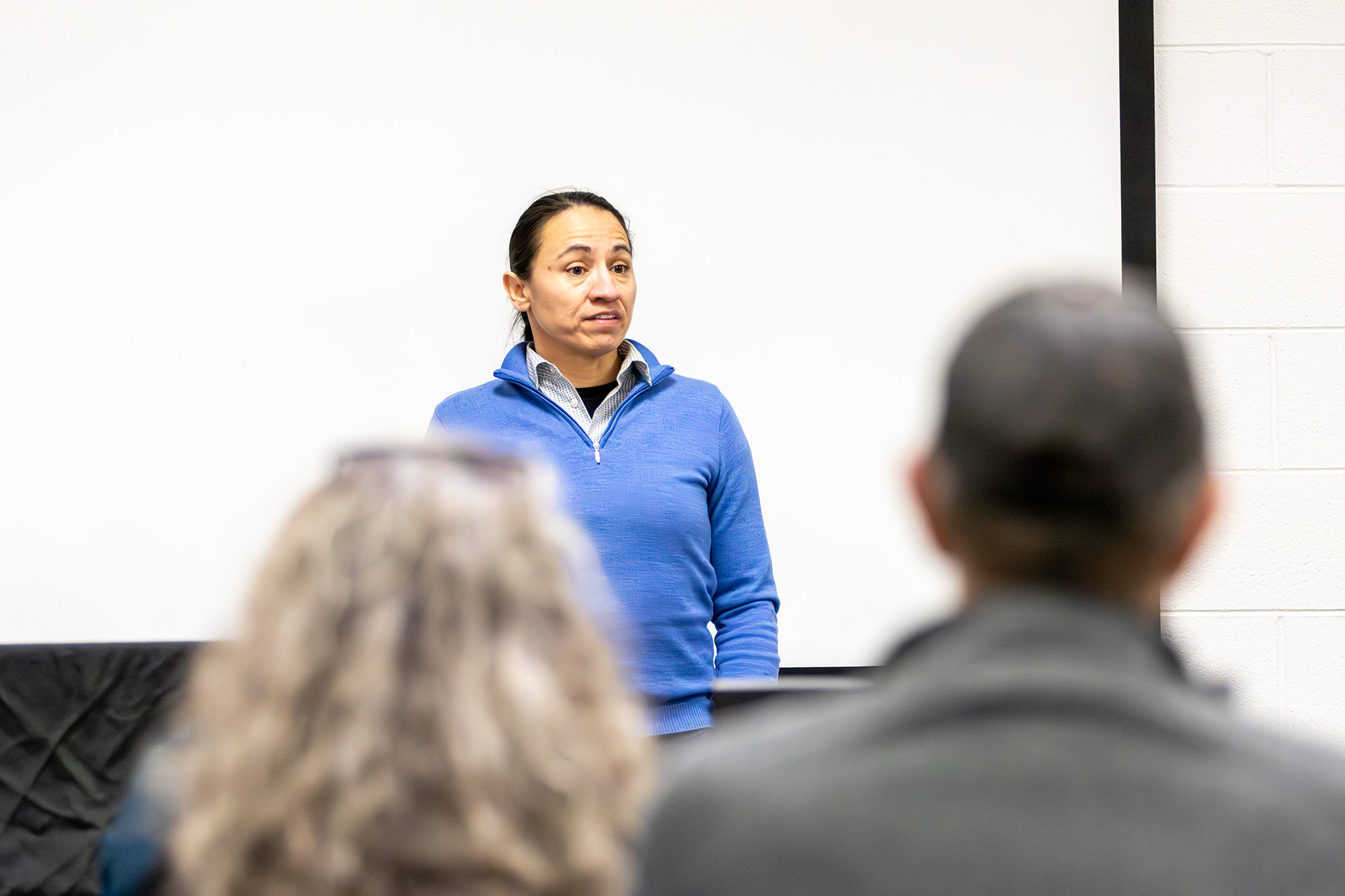
Water quality and quantity emerged as another major topic, particularly concerns surrounding the Ogallala Aquifer and nitrate contamination in rural water systems. Davids acknowledged that western Kansas faces very different challenges than her Kansas City–area district, which deals more often with flooding, and said she welcomed continued dialogue with local experts and state officials working on water management strategies.
Other questions addressed voter access and election integrity, funding cuts affecting Head Start and early childhood education, and perceived abuses within the crop insurance system that can incentivize riskier planting practices. Davids spoke about the complexity of those issues and the need for guardrails that protect farmers while discouraging unintended consequences.
The most emotional exchange came during a discussion of recent anti-transgender legislation, when a community member shared personal testimony about the impact such policies have had on families. Davids urged moving away from rigid party-line decision-making and stressed that government should be guided by basic moral responsibility and concern for community well-being, particularly when legislation affects vulnerable populations.
The meeting concluded with remarks from Tracy Munk of High Plains Mental Health, who outlined available crisis response services and emphasized the importance of mental health support amid heightened political stress.
While some attendees speculated about Davids’ political future and the possibility of a statewide run, she made no announcement and did not indicate plans beyond her current role representing Kansas’ 3rd Congressional District. Instead, she thanked the group for the candid discussion and encouraged continued local engagement, noting that conversations in small rooms like the one in Colby help inform her work in Washington.