



Colby City Council Advances Major Energy Investment, Tables Sunflower Festival Street Closure
February 17, 2026
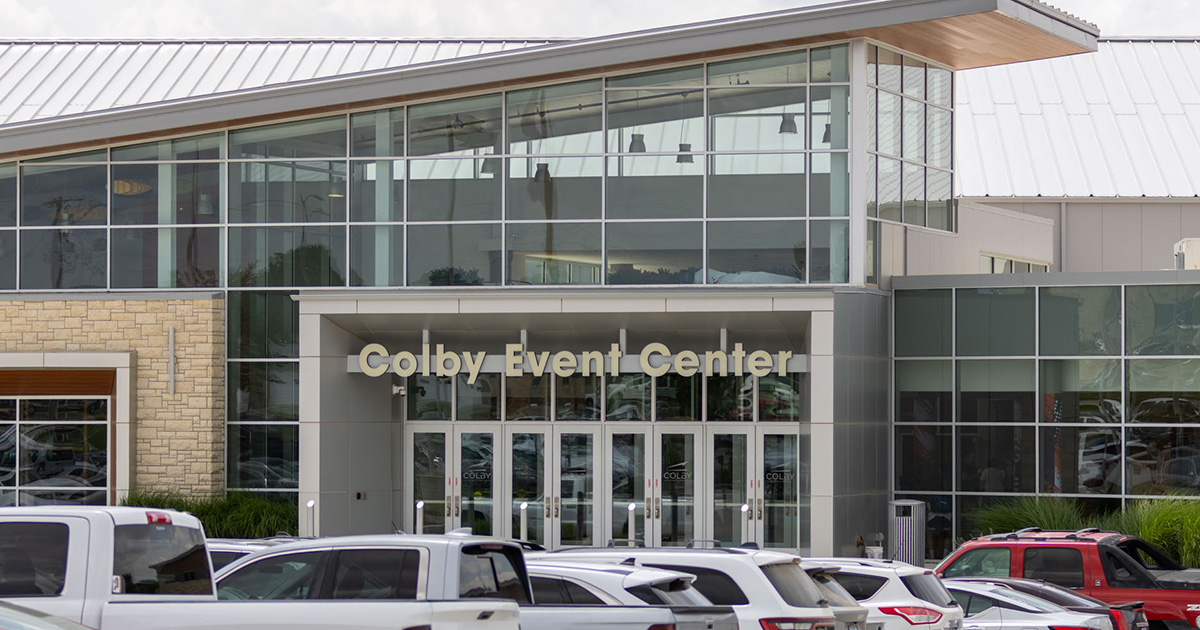
The Colby City Council met February 17 at the Colby Event Center, moving forward on a multi-million-dollar energy investment while tabling a Sunflower Festival street closure request for further discussion.
Following roll call, council members unanimously approved the consent agenda. There was no old business.
Under new business, Molly Oliver with Big Iron Realty addressed the council regarding a request to close the 300 block of North Franklin Avenue in front of the B.R.O. Motorcycle Museum during the annual Sunflower Festival.
Oliver outlined plans for a family-friendly motorcycle-themed gathering on Saturday of the festival, potentially from 10 a.m. to mid-afternoon. Proposed activities included youth bike showcases, informal awards, safety demonstrations, and collaboration with other downtown businesses. She emphasized coordination with festival organizers to ensure the activities would complement the broader schedule.

Discussion among council members centered on public safety concerns, particularly pedestrian traffic crossing U.S. Highway 24 between the north and south portions of downtown, especially during Friday evening cruise night events that typically generate heavy vehicle traffic.
Because additional downtown businesses may also wish to participate — and due to questions surrounding Friday versus Saturday closure needs — the council voted to table the request until its March 3 meeting. City officials will gather further input from downtown stakeholders and law enforcement before making a final decision.
Council members next approved Ordinance No. 1706, authorizing the issuance of multi-family housing revenue bonds for the Willow Estates duplex development North of Jimmy John’s.
The bond, totaling approximately $5 million, supports acquisition, construction and equipping of the housing project. City officials clarified that Colby’s participation involves a sales tax exemption incentive rather than a full property tax abatement. Final project costs came in just under the authorized bond cap.
The ordinance passed unanimously to complete the project.
The most extensive discussion of the evening centered on the approval of a sales agreement to purchase six used two-megawatt Caterpillar 3516 engine generators for $1.8 million from High Plains Power Systems LLC.
City Manager Ron Alexander and Electric Department Director Brad Davis presented the proposal, explaining the strategic value of increasing Colby’s generation capacity.
Colby purchases wholesale power from Midwest Energy and resells it at retail rates to support the city’s electric infrastructure. However, the city must also maintain reserve generation capacity to meet Southwest Power Pool requirements and protect against price spikes during periods of extreme demand.
Officials cited recent winter conditions in which wholesale energy prices briefly increased the per megawatt hour, illustrating the financial risk of insufficient local generation.
The six generators — each producing two megawatts — would provide 12 megawatts of additional capacity. By comparison, the city’s most recent three-megawatt generator purchase cost approximately $2.6 million. Officials noted that acquiring 12 megawatts for roughly $4 million total installed cost represents a significantly lower per-megawatt investment.
The generators, manufactured in 2000, have relatively low operating hours and will undergo load testing before delivery. While no traditional warranty accompanies the purchase, maintenance records and inspection documentation will be provided. City staff expressed confidence in the long-term serviceability of the Caterpillar 3516 platform, citing widespread parts availability and local service support.
The units are expected to be temporarily stored at a city facility until air permitting and construction approvals are completed — a process that could take several months.
Council discussion also explored long-term placement strategy. Some generators are likely to be installed at the southwest substation to support anticipated industrial and commercial growth on the south side of Colby. Officials noted that distributing generation assets geographically would also enhance resiliency in the event of a localized disaster affecting the existing power plant.
To finance the purchase and future installation costs — including switchgear, building construction and emissions compliance — the city anticipates modest adjustments to electric rates. Proposed changes include increasing the monthly residential meter charge from $15 to $20 and adjusting the per-kilowatt-hour rate by approximately one cent. Officials estimated that residential bills would increase roughly $8 to $15 per month depending on usage.
Even with the proposed increase, Colby’s electric rates would remain among the lowest in Kansas.
Finance Director Debra Zerr indicated the city can responsibly manage the investment using a combination of lease financing and internal capacity funds, minimizing interest exposure while maintaining reserves.
After extended discussion, the council approved the generator purchase on a 6–1 vote, with one Marc Pearce absent and Michelle Morris opposed.
A related financing resolution was tabled until March 3 to allow additional legal documentation to be prepared.
The meeting concluded with routine council comments and adjournment.
The March 3 meeting is expected to revisit both the Sunflower Festival street closure request and financing arrangements tied to the generator purchase — two decisions that will shape both downtown activity and Colby’s long-term infrastructure strategy.